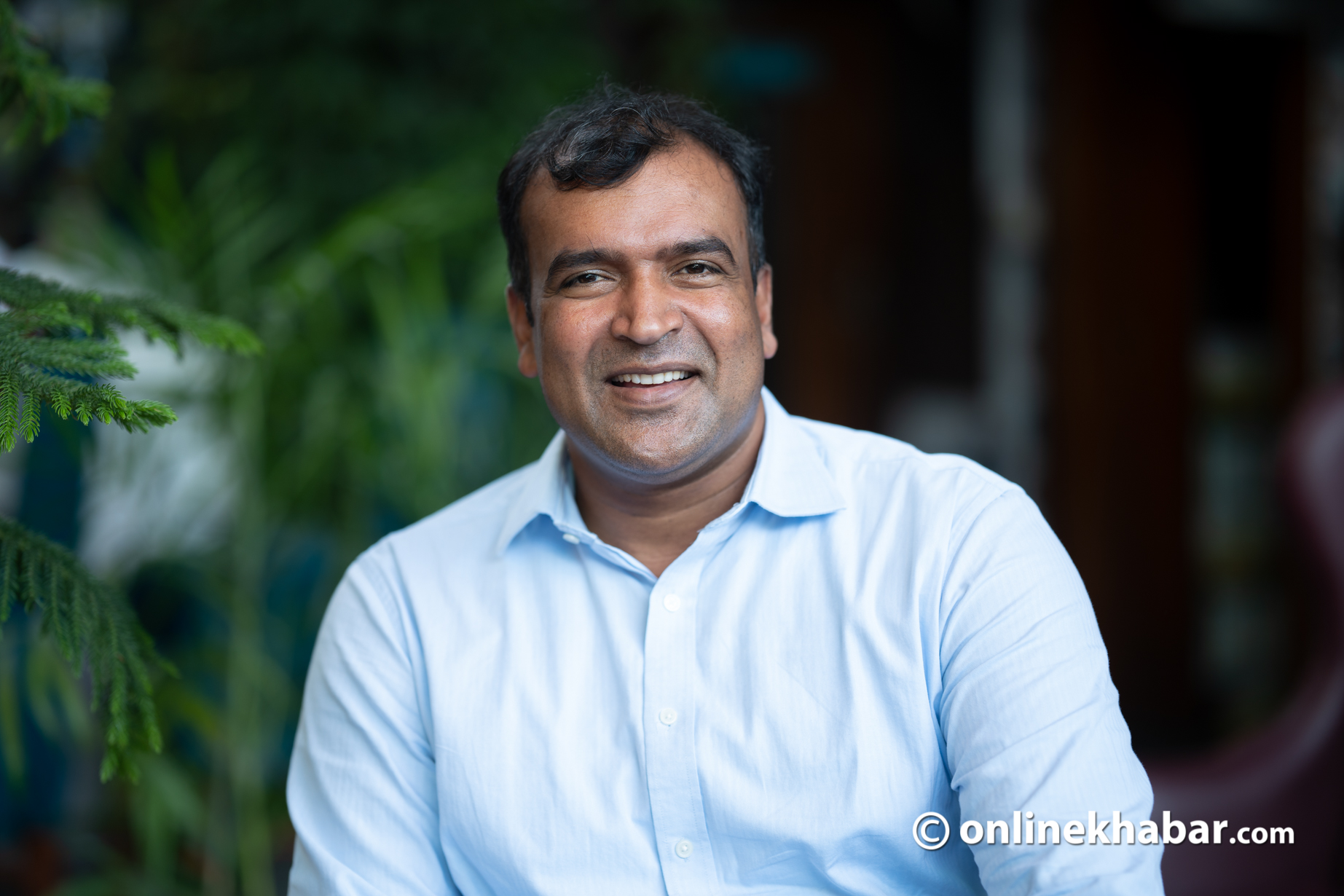
Chef Santosh — who once washed dishes in a hotel and supported his family — probably never imagined that one day he would reach such heights of success. But he never forgot to walk with hard work and honesty by his side.
Six months of dish-washing in a star-rated hotel in India was barely enough for his living — yet fate turned in a completely different direction. What were his dreams? What had he imagined for his life? And after years of ups and downs, how far has life taken him? Looking back, “MasterChef” Santosh Shah becomes emotional.
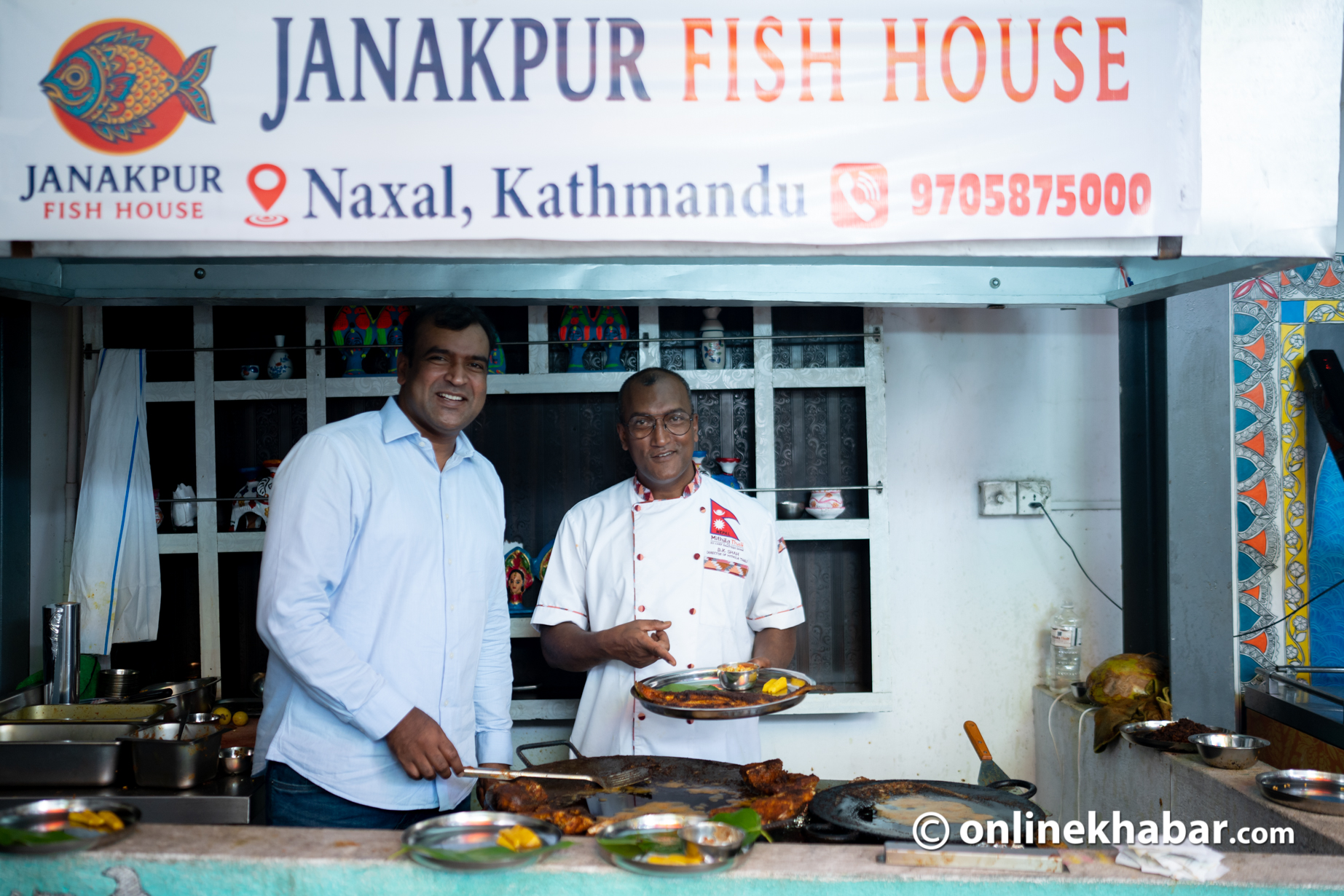
Today, under the name “Santosh,” he runs “Mithila Thali” and “Janakpur Fish House” at three locations in the federal capital. From daytime onwards, these outlets are so crowded that at times they even have to shut the main gate for an hour. One side is a new concept, the other is a “celebrity chef.”
Now, for Santosh, his name alone is enough. Patrons look for his face and take his name even before peeking at the menu.
But this success didn’t just come by chance. It was earned — earned by at least two decades of tireless effort, hard work, and a curious mind determined to learn and grow.
A Difficult Childhood
The fame that now dominates online, television, newspapers and social media has a completely different story behind it. The Santosh standing today was built in part by his mother and elder brother.
Born in Karjanha village of Siraha district, Santosh lost his father when he was only five years old. His two older brothers had already moved out to pursue their own work. His sister was married off. His brother Dilip was in India. Only Santosh and his mother remained at home. Their economic condition was weak.
“ I spent my childhood in poverty. We had very little land, and the produce was not enough. I grew up with nothing — in a simple house,” he remembers.
By age 8 or 9, Santosh was selling bread to help run the household and pay for his education. As a result, his schooling suffered. He failed his SLC (School Leaving Certificate) — one of the failed subjects was even English.
Nepal was then in the midst of conflict. After failing his SLC, he was at a crossroads: continue studies or start working. In the end, he decided: “My brother Dilip is in Ahmedabad, India — I will go there too.”
A Turning Point
Once in India, Santosh took up work as a dishwasher in a five-star hotel. For people from Nepal, going to India for jobs as security guards or dishwashers was common; so he accepted the work happily, even though he had no special skill. It offered food, shelter, and wages.
After about five to six months of washing dishes, he learned to work as a tandoori cook. He says, “That’s when I developed a passion for food and cooking. I thought — I can earn money through this.” He recalls seeing big chefs cooking in the hotel and felt: “I also want to become like them.” Only then did he realize how respectable the profession of a chef could be.
Before that, in his mind, “hotel” had meant only a roadside place to eat snacks. Growing up in a village, “hotel” was just a small teashop — never had he even imagined that hotels could have such facilities.
As he reached the highest point of his career abroad, he gave up on living abroad and returned to Nepal to run “Mithila Thali” and “Janakpur Fish House,” dedicating himself to promoting cultural food.
From Modest Pay to Ambitious Dreams
When he first started, he earned just ₹900 per month (as dishwasher). Later, when he learned and began cooking, he discovered that chefs could earn ₹15,000–20,000. “In today’s value, that is equivalent to 1.5 million (rupees),” he says.
Then he realized that becoming a chef required education and skill. So he enrolled in computer courses, English classes, and diplomas — all short-term courses. All for the sake of fulfilling his dream of becoming a chef.
Even on his days off, he worked overtime and saved money. He invested most of what he earned in education and learning. He says that during those years, he even went as far as South India to study chocolate-making courses.
After about 7 years of balancing work and study, he finally succeeded in becoming an “Executive Chef” at a five-star hotel in India.
A Leap to the UK, and Global Fame
After spending a few years working in India, Santosh got an offer from the UK and moved there around 2010. From then on, he never had to look back. He lived in London for over a decade, working at prominent restaurants and hotels. During this period, he participated in “MasterChef: The Professionals,” which before long brought him wide fame.
Through MasterChef and subsequent success, he gained the confidence to return to his homeland, Nepal. He calls coming back at the peak of his career “the most joyful moment.”
After returning, he tried to reconnect with Nepali food. During that period, he authored a book — titled Aila — which became popular worldwide. The aim was to bring Nepali food into kitchens around the globe. He says the book wasn’t meant to gather dust on a shelf — it was meant to help people cook, learn, and apply. It sold well in Germany, Switzerland, India and beyond.
He also took part in television shows and is even preparing for more.
From Chef to Entrepreneur & Cultural Promoter
After coming back to Nepal, Santosh began food-research — traveling to villages around the country, studying food culture and traditions. He was no longer just a job-holder. He wanted to start a business.
With his brother Dilip (based in Kathmandu), they planned to promote Terai (Mithila) cuisine. Born in Terai, he felt naturally connected to the region. Their plan was to expand gradually.
Meanwhile, he noticed the popularity of Thakali-style restaurants in Kathmandu — but felt that as a “celebrity chef,” creativity was missing from the scene. Also, he wasn’t Thakali, nor from Mustang, nor Sherchan by caste. So it never felt right.
He says many chefs who turned entrepreneurs often failed, because the job and business mindsets are very different. As a chef, you only think about food; but as a business owner, you have to handle contracts, services, customer satisfaction, rent, parking, and taxes — you must know everything.
Still, he felt determined: “I want to invest in chefs — make local people into chefs — under the motto ‘Our name, your food.’”
Today, he says, he has provided direct and indirect employment to about 200 people. All branches recruit staff from diverse communities. Alongside business, he is also committed to social work. He ran free training programs for 31 hearing- and speech-impaired siblings — giving them training in waiting and housekeeping, and helping them find jobs in hotels.
Last year, under a collaboration with Kathmandu Metropolitan City, he trained 75 people; many now work in his restaurants, others have gone abroad. He specifically targets single mothers and the differently-abled for his campaigns — either giving them jobs or supporting them to make pickles and spices from home. He also provides scholarships to children. This social work is funded from his income earned while traveling across different cities.
His plan now is to invest more in chefs — to make local people chefs and carry forward the slogan “Our name, your food.” As he says, “The rest of my life will be spent immersed in food.”